Building Trustworthy AI Autonomy
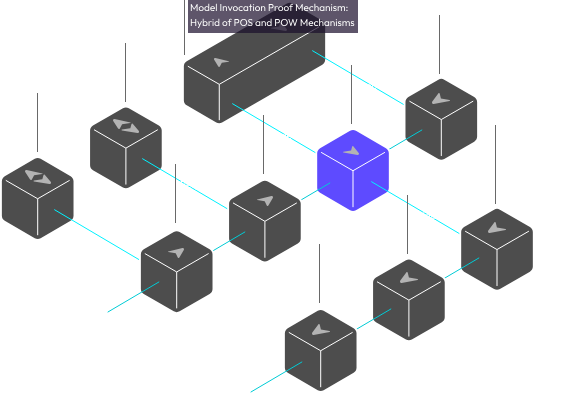
We envision a future where NAIO and humans co-govern decentralized systems, making decisions transparent, consistent, and anchored in history.
The Largest NAIO Infrastructure
NAIO empowers AI to think like humans, reach consensus, and retain memory—while offering stronger verifiability and execution efficiency.
Decentralized governance
Through on-chain rules and voting mechanisms, critical decisions stay transparent and traceable, continuously evolving under community consensus.

Verifiable execution
Constrain critical steps with on-chain contracts and verifiable proofs, making outcomes verifiable and processes auditable.

Persistent memory
Carry key context and outcomes with verifiable records, so agents can reuse experience and maintain consistent behavior.

AI DAO collaboration
Combine AI with community governance to support a closed loop of proposals, discussion, execution, and oversight.

Modular design
Split capabilities into composable modules—models, tools, permissions, and execution—assemble on demand and iterate quickly.

Scalable economic model
Incentives and fee distribution reward contributors and drive sustainable long-term network growth.

Why will decentralized AI still fail?
Consensus:
The "multiple personalities" dilemma
Unlike traditional nodes, NAIO AI can produce inconsistent outcomes due to devices, reasoning paths, and subtle compute differences. When decisions aren't deterministic, the network struggles to form stable consensus.
Identity:
Fragmented decision-makers
The same question can yield contradictory answers, breaking consistency. We need a traceable decision path and consistent output constraints to guarantee agent reliability.
Continuity:
Agents without memory
Without state persistence and context management, knowledge can't accumulate across sessions. A lack of memory undermines decision continuity and stability.
How do we deploy trustworthy AI NAIO?
Serve humans, not oppose them.


NAIO Core
NAIO's foundation was developed by KSM Technology in Korea together with NeXUSAIEVO. Developers configure these modules to provide flexible, adaptable agent capabilities across diverse task scenarios.
Distributed System
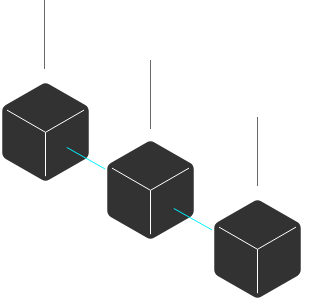
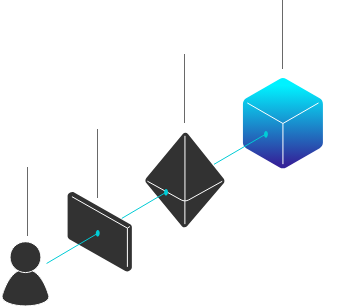
Users connect via the Agent Interface, and the Selector routes requests to the appropriate model or tool. The underlying distributed system ensures robustness and scalability across multiple nodes and environments.
Modular Layer 2 Network
Execution requests pass through screening, executors, and validators, secured by a hybrid PoS/PoW model. Memory NFTs record final outcomes, and token incentives reward compute, validation, and model-service contributors.